What Are Superconductors? How They Work, Applications & Future Potential
Superconductors are fascinating materials that can carry electricity without any resistance when cooled to very low temperatures. This unique property opens up a world of possibilities in technology and energy efficiency. As we explore superconductors, we’ll look at how they work, where they’re used now, and what the future might hold for these remarkable materials.
Key Takeaways
- Superconductors exhibit zero electrical resistance at very low temperatures.
- They were discovered in 1911 and have evolved in types and applications since then.
- Current uses include MRI machines, maglev trains, and efficient power transmission systems.
- Research is ongoing to develop superconductors that work at higher temperatures, even room temperature.
- Superconductors have the potential to revolutionize energy systems and transportation, but challenges remain.
Understanding Superconductors
Definition and Characteristics
Okay, so what are superconductorsnull? Basically, they're materials that can conduct electricity with absolutely zero resistance. Imagine a wire where electricity flows forever without losing any power! This happens at super low temperatures, close to absolute zero. It's a wild concept, and it opens up a ton of possibilities. Unlike regular conductors, which gradually lose resistance as they cool, superconductors hit a point, a critical temperature, where resistance vanishes completely.
Historical Background
The story of superconductors starts back in 1911. A Dutch physicist named Heike Kamerlingh Onnes was messing around with mercury at super-cold temperatures (we're talking liquid helium levels of cold). He noticed something crazy: at around 4 Kelvin (-269°C), the electrical resistance of the mercury just disappeared. Boom! Superconductivity was discovered. For decades, scientists thought superconductivity was only possible at these crazy low temperatures. It wasn't until later that they found materials that could do it at slightly warmer (but still very cold) temperatures. It's been a race ever since to find materials that work closer to room temperature. The discovery of superconducting materials was a huge deal, opening up a whole new field of physics.
Types of Superconductors
Superconductors aren't all the same. There are a few main types, and they behave differently. Here's a quick rundown:
- Type I Superconductors: These are your classic superconductors, like the original mercury. They have a single critical temperature. Above that, they're normal; below that, they're superconducting. They also completely expel magnetic fields (more on that later).
- Type II Superconductors: These are a bit more complex. They have two critical temperatures. Between the lower and upper critical temperatures, magnetic fields can partially penetrate the material in the form of tiny tubes called fluxons. This makes them useful for high-field applications.
- High-Temperature Superconductors (HTS): These are the rockstars of the superconductor world. Discovered in the 1980s, they can operate at relatively "high" temperatures (still cold, but not liquid helium cold). They're usually complex ceramic materials. The exact mechanism behind their superconductivity is still not fully understood, which is a big area of research. Understanding superconductor classification is key to unlocking their potential.
Superconductivity is a quantum mechanical phenomenon, meaning it's governed by the weird rules of quantum physics. It's not just about cooling things down; it's about how electrons behave at these temperatures. They team up in a special way, which leads to the amazing properties we see.
Mechanisms Behind Superconductivity
Cooper Pairs and Electron Interactions
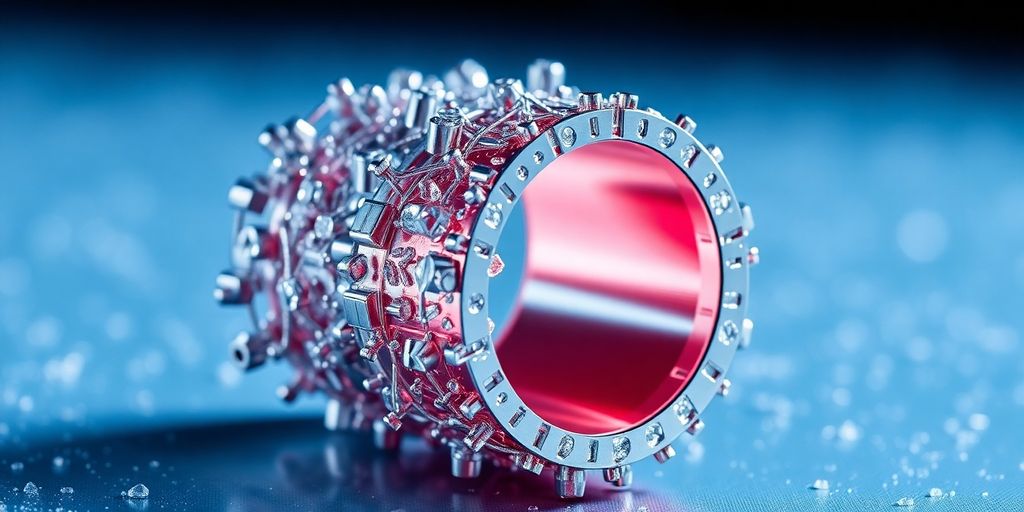
Okay, so how does this whole superconductivity thing actually work? It's all about what happens at the atomic level. The key is something called Cooper pairs. Basically, electrons, which normally repel each other, start to team up. This happens because of interactions with the crystal lattice of the material. One electron moves through the lattice, causing it to distort slightly. This distortion creates a region of positive charge that attracts another electron. It's like one electron calling out to its buddy, "Hey, come over here, it's cool!"
Electron-phonon interactions are crucial here. The lattice vibrations (phonons) mediate the attraction between electrons, allowing them to form these Cooper pairs. These pairs then act as a single unit, moving through the material without resistance. It's kind of like a dance where everyone moves in perfect sync, avoiding any collisions.
Critical Temperature and Phase Transition
Every superconductor has a critical temperature critical temperature (Tc). Above this temperature, the material behaves like a normal conductor, with resistance. But below Tc, BAM! Superconductivity kicks in. It's a phase transition, like water freezing into ice. The Cooper pairs form, and the material enters a new state with zero resistance. The higher the critical temperature, the easier it is to achieve superconductivity, which is why scientists are always looking for materials with higher Tc values.
Think of it like this: above the critical temperature, the electrons are all doing their own thing, bouncing around randomly. But as you cool the material down, they start to pair up and move in an organized way, leading to superconductivity.
Meissner Effect and Magnetic Properties
Superconductors don't just conduct electricity perfectly; they also have weird magnetic properties. This is where the Meissner effect comes in. Basically, a superconductor expels all magnetic fields from its interior. If you put a magnet near a superconductor, the superconductor will push the magnet away. This is why you see those cool demos where magnets float above superconductors. It's not just levitation; it's magnetic field expulsion.
Here's a quick rundown of the magnetic behavior:
- Perfect Diamagnetism: Superconductors act as perfect diamagnets, completely excluding magnetic fields.
- Flux Quantization: Magnetic flux can only penetrate a superconductor in quantized units.
- Type I vs. Type II: Superconductors are classified into Type I and Type II based on how they respond to magnetic fields. Type II can tolerate much higher magnetic fields, which is important for many applications.
Current Applications of Superconductors
Medical Imaging Technologies
Superconductors play a vital role in medical diagnostics, especially in Magnetic Resonance Imaging (MRI) machines. These machines use powerful superconducting magnets to generate strong and stable magnetic fields. This allows doctors to get detailed images of the human body's soft tissues. The superconducting magnets are more efficient and can achieve higher field strengths than traditional electromagnets, leading to better image quality. It's pretty cool how such advanced tech helps doctors see inside us without surgery.
Magnetic Levitation Transportation
Imagine trains that float above the tracks, reaching incredible speeds. That's the promise of magnetic levitation (Maglev) trains, and superconductors are key to making it happen. These trains use powerful superconducting magnets to levitate above the tracks, reducing friction and allowing for much higher speeds than conventional trains. While still in development and not widely used, Maglev trains offer a glimpse into the future of transportation. Japan and Germany have been experimenting with this tech for a while now. It's like something out of a sci-fi movie!
High-Efficiency Power Transmission
One of the most exciting potential applications of superconductors is in power transmission. Superconducting cables can transmit electricity with almost no energy loss, unlike traditional copper or aluminum cables. This could revolutionize the way we distribute electricity, reducing energy waste and making our power grids more efficient. Imagine a world where power lines don't lose energy as they carry electricity across long distances. That's the promise of superconducting power transmission. The challenge is making it cost-effective and scalable, but the potential benefits are huge.
Superconductors have already found their way into various applications, and their potential to transform industries is immense. From medical imaging to transportation and power transmission, these materials are paving the way for a more efficient and technologically advanced future. The ongoing research and development in this field promise even more exciting applications in the years to come.
Advancements in Superconductor Research
High-Temperature Superconductors
The quest for materials that exhibit superconductivity at higher temperatures has been a driving force in the field. The discovery of high-temperature superconductors (HTS) in 1986 revolutionized the field, offering the potential to use cheaper coolants like liquid nitrogen. Before this, materials needed to be cooled to extremely low temperatures using liquid helium, which is expensive and difficult to handle. The first HTS material was a ceramic made of lanthanum, barium, copper, and oxygen (LBCO), achieving superconductivity at 30°K. Shortly after, researchers substituted yttrium for lanthanum (YBCO), raising the critical temperature to approximately 90°K. These high-temperature superconductors opened up new possibilities for applications, but challenges remain in terms of material properties and manufacturing.
Room-Temperature Superconductivity
The holy grail of superconductor research is achieving room-temperature superconductivity. Imagine a world where energy transmission is lossless, and devices operate with unparalleled efficiency! While still largely theoretical, recent research has shown promise. For example, scientists have observed superconductivity at maximum superconducting critical temperatures of about 15 degrees Celsius at around 267 Gigapascals. However, the extreme pressures required limit practical applications. The challenge is to find materials that exhibit superconductivity at ambient temperatures and pressures. This would truly revolutionize technology. The superconductors market is projected to grow, driven by these advancements.
Challenges in Material Development
Developing new superconducting materials is not easy. Several hurdles need to be overcome:
- Material Instability: Many promising materials are unstable under normal conditions.
- Brittleness: Some superconductors are brittle and difficult to work with.
- High Pressure Requirements: As mentioned, some materials only exhibit superconductivity at extremely high pressures.
Overcoming these challenges requires a multidisciplinary approach, combining materials science, physics, and chemistry. Researchers are exploring new materials and fabrication techniques to create superconductors that are stable, durable, and can operate at practical temperatures and pressures.
Future Potential of Superconductors
Superconductors are not just a cool science experiment; they hold the key to some seriously game-changing technologies. Imagine a world with almost no energy waste, super-fast transportation, and computers that make today's machines look like abacuses. That's the promise of superconductors. The challenge? Getting them to work in everyday conditions, not just in super-cooled labs. But if we crack that nut, the possibilities are pretty wild.
Impact on Energy Systems
Think about all the energy lost as electricity travels through power lines. It's a huge amount! Superconductors could virtually eliminate that loss. Imagine the impact on our energy bills and the environment.
- Reduced energy waste during transmission
- More efficient energy storage solutions
- Enabling wider use of renewable energy sources
Superconductors could revolutionize how we transmit and store energy, making our systems far more efficient and sustainable. This could lead to significant cost savings and a smaller carbon footprint.
Revolutionizing Transportation
Maglev trains are already a reality, but they're expensive to build and maintain. Superconductors could make them cheaper and more efficient, leading to a transportation revolution. Imagine trains that float above the tracks, traveling at incredible speeds with minimal energy consumption. Beyond trains, superconductors could also play a role in electric vehicles, making them more powerful and efficient. The potential for magnetic levitation devices is huge.
Role in Quantum Computing
Quantum computers are the next frontier in computing, promising to solve problems that are impossible for today's machines. But they're incredibly sensitive and require extremely low temperatures to operate. Superconductors are essential for creating and maintaining those conditions. They also play a role in building the quantum circuits themselves. Without superconductors, quantum computing would be a pipe dream. The global race to construct quantum computers is dependent on efforts to find suitable superconductors.
| Feature | Current Computers | Quantum Computers (with Superconductors) |
|---|---|---|
| Processing Power | Limited | Exponentially Higher |
| Energy Consumption | High | Potentially Lower |
| Size | Large | Potentially Smaller |
Challenges Facing Superconductor Technology
Cost of Cooling and Maintenance
One of the biggest hurdles for widespread superconductor use is the need for extremely low temperatures. Most superconductors require cooling with liquid helium or nitrogen, which is expensive and energy-intensive. This significantly increases the operational costs and limits the practicality of many applications.
- The cost of liquid helium can fluctuate wildly, impacting research and development budgets.
- Maintaining cryogenic systems requires specialized equipment and trained personnel.
- The energy needed for cooling can offset some of the efficiency gains from using superconductors.
Finding ways to reduce the cooling requirements or discover materials that superconduct at higher temperatures is a major focus of current research. This would dramatically lower costs and make superconductors more accessible.
Material Limitations
While some high-temperature superconductors exist, they often have other limitations. They can be brittle, difficult to manufacture into wires or other useful forms, and may not carry as much current as lower-temperature superconductors. Material science is key to overcoming these challenges.
- Many high-temperature superconductors are ceramics, which are difficult to work with.
- Some materials are sensitive to impurities or require precise processing conditions.
- The critical current density (the amount of current a superconductor can carry) can be a limiting factor.
Scalability Issues
Even with promising materials, scaling up production to meet industrial demands is a challenge. Manufacturing processes need to be refined to produce large quantities of high-quality superconducting materials at a reasonable cost.
- Current manufacturing methods can be slow and expensive.
- Ensuring uniformity and consistency in large-scale production is difficult.
- The infrastructure for handling and using superconducting materials is not yet widely available.
The Role of Superconductors in Sustainable Energy
Superconductors have the potential to really change how we handle energy, especially as we try to move toward more sustainable practices. Because they can carry electricity with almost no loss, they could make our energy systems way more efficient and help us use renewable energy better. It's a pretty big deal when you think about it.
Reducing Energy Loss
One of the biggest problems with our current electrical grids is that a lot of energy gets lost as it travels through the wires. This happens because of resistance in the materials, like copper, that the wires are made of. Superconductors, on the other hand, have almost zero resistance, which means electricity can flow without losing energy. Imagine power grid efficiency going way up just by switching to these materials! It would save a ton of energy and reduce the need to generate as much in the first place.
Integration with Renewable Sources
As we use more renewable energy sources like solar and wind, we need better ways to store and move that energy. These sources aren't always consistent – the sun doesn't always shine, and the wind doesn't always blow. Superconductors could help us build more efficient energy storage systems, like Superconducting Magnetic Energy Storage (SMES). These systems can quickly store and release energy, which helps balance the supply and demand when renewable sources fluctuate.
Smart Grid Innovations
Superconductors could also play a big role in creating smarter electrical grids. These grids use technology to monitor and manage the flow of electricity in real-time, making the system more efficient and reliable. With superconductors, we could build more advanced sensors and control systems that can handle larger amounts of power with minimal loss. This would make the grid more resilient and better able to handle the demands of a modern, sustainable energy system.
Superconductors could really help us make our energy systems more sustainable. By reducing energy loss, improving energy storage, and enabling smarter grids, these materials could play a key role in a cleaner, more efficient energy future.
Wrapping It Up
In summary, superconductors are pretty amazing materials that can carry electricity without losing energy. They have some cool applications already, like in MRI machines and maglev trains, but we’re still figuring out how to make them work at higher temperatures. If we can crack that code, it could change everything from how we power our homes to how we transport goods. Sure, there’s a lot of research left to do, but the potential is huge. So, while we might not see superconductors in every gadget just yet, the future looks bright for these fascinating materials.
Frequently Asked Questions
What exactly are superconductors?
Superconductors are special materials that can carry electricity without any resistance. This means that they can conduct electric current perfectly when they are cooled to very low temperatures.
How do superconductors work?
Superconductors work by allowing pairs of electrons to move through them without bumping into anything that would normally cause resistance. This happens at very low temperatures.
What are some uses of superconductors today?
Superconductors are used in medical devices like MRI machines, in trains that float above tracks (maglev trains), and they can help transmit electricity more efficiently.
What is the future potential of superconductors?
In the future, superconductors could help create better energy systems, improve transportation, and play a big role in developing quantum computers.
What challenges do superconductors face?
Some challenges include the high costs of keeping them cold and the difficulty in finding materials that can work as superconductors at higher temperatures.
How could superconductors help with renewable energy?
Superconductors can reduce energy loss during transmission, making it easier to use renewable energy sources like solar and wind power more effectively.
.jpg)
Comments
Post a Comment